Every Olympic bar worth knowing about, on one page.
52 Olympic barbells sold in Britain, from a £100 starter bar to an IWF-certified competition bar, compared on the numbers that actually decide it — shaft diameter, tensile strength, knurl and how the sleeves turn. Every figure is the maker’s own. Nothing here is for sale.
Which kind of bar do you need?
Nearly every bad barbell purchase is the right bar for the wrong job. Pick the type first, then compare inside it.
Power bars
A 29mm shaft, almost no whip and a centre knurl that grips your back. Built for the squat, the bench press and the deadlift, and the standard diameter across powerlifting federations.
See the power bars →8 barsOlympic weightlifting bars
A 28mm shaft on needle bearings, so the sleeves spin fast enough to let the bar turn in your hands through a snatch or a clean. Marked to IWF grip spacing.
See the olympic weightlifting bars →11 barsMultipurpose bars
One bar for everything — 28mm to 28.5mm, dual knurl marks for both grip standards, moderate spin. What most home gyms and most mixed-training gyms actually need.
See the multipurpose bars →8 barsWomen's 15kg bars
15kg, a 25mm shaft and 201cm overall — the IWF specification for women’s weightlifting. The thinner shaft also suits anyone whose hands struggle to close round 28mm.
See the women's 15kg bars →5 barsDeadlift bars
A 27mm shaft and a longer span between the sleeves, so the bar bends before the plates leave the floor. Aggressive knurl, no centre knurl. Not for squatting or benching.
See the deadlift bars →3 barsSquat bars
32mm to 35mm and 25kg, fully knurled and deliberately stiff. The extra diameter keeps a heavy bar dead still across your back instead of oscillating.
See the squat bars →5 barsTechnique and short bars
Light bars for learning the lifts, and 6ft bars for garages where a 7ft bar will not fit between the walls. Lower load ratings — check them before loading up.
See the technique and short bars →Six bars, six different jobs
One from each corner of the range, to show what the comparison looks like. The full table has all 52.
Every figure is the manufacturer’s or retailer’s own published specification. An em dash (—) means they do not publish that figure — it is never a number we have guessed. “Tensile” is tensile strength in thousands of PSI. “Rotation” is bushings, needle bearings, or both in the same sleeve. No prices are listed here, deliberately: check the current price with the shop.
See all 52 bars →We will never tell you which bar is best.
Nobody here has trained on this equipment. A review written by someone who has not used the thing is worth nothing, and a ranking built on that is worse, because it looks like knowledge.
So this site does the part it can do honestly: it collects what the manufacturers publish, puts it in the same table so the figures are comparable, says plainly where a maker publishes nothing, and explains in the guides how to read it all. The decision stays yours, which is where it belongs.
Why the site works this way“Tested to 680kg” is a figure you can check. “Best bar of 2026” is a figure somebody made up.
No reviews. No scores. No rankings. No prices.Plates for an Olympic bar
A bar with 50mm sleeves takes any plate with a 50mm collar opening, which sounds simple until you work out that bumper plates, calibrated steel discs and cast iron are three genuinely different purchases with three different jobs.
The plates page covers all six kinds, what each one is for, the published specifications, the IWF colour code, and which UK shops stock them. Including the thing most people get wrong: how much weight will actually fit on the sleeve.
6 shops that deliver to the UK
Three UK brands selling direct, two UK retailers, and the two overseas manufacturers that run their own British or EU storefronts. Who they are, what they stock, and what to watch for on delivery and duty.
- Mirafit — brand-direct, 12 bars listed here
- Strength Shop — retailer, 15 bars listed here
- Bulldog Gear — brand-direct, 6 bars listed here
- Eleiko — brand-direct, 8 bars listed here
Guides
How to judge a bar yourself, which is more useful than being told what to buy.
How to choose an Olympic barbell
The four decisions that settle it: what you lift, how thick the shaft is, bushings or bearings, and how much steel you actually need.
Read the guide →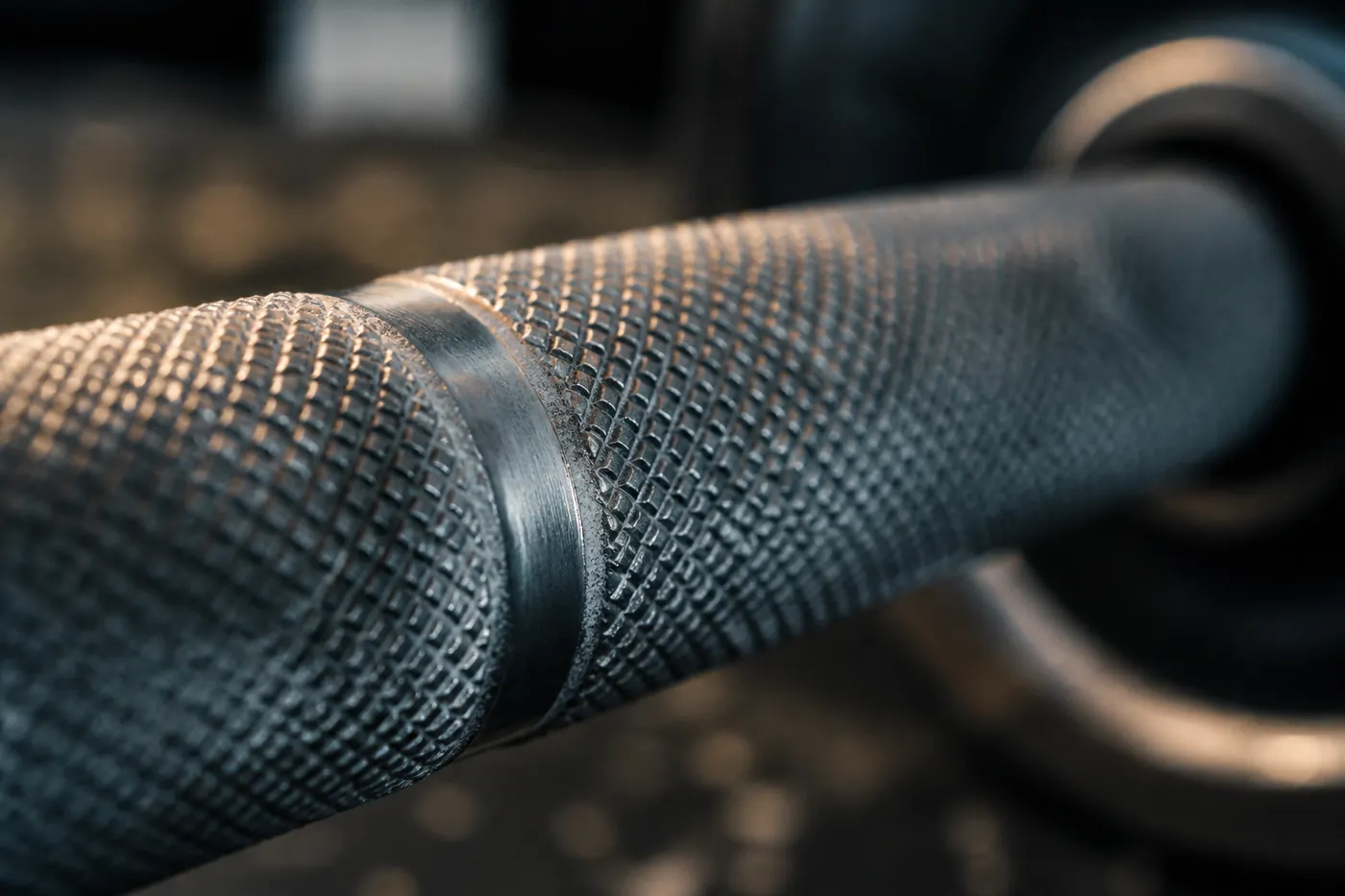
Barbell specifications explained
Tensile strength, whip, knurling, knurl marks, sleeve rotation, load ratings — what each number on the listing means and which ones matter to you.
Read the guide →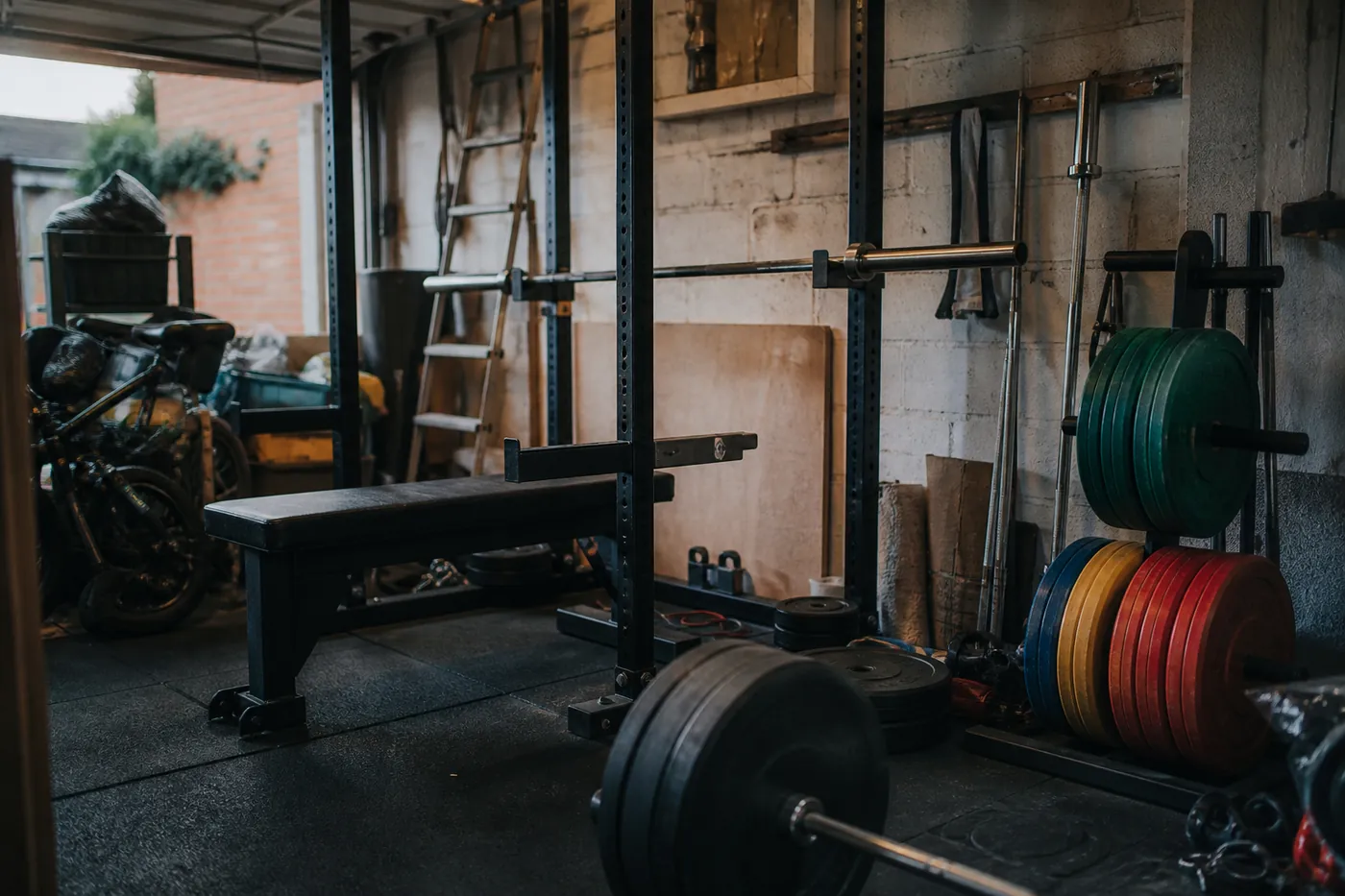
Buying a barbell for a home gym
Ceiling height, bar length, how damp your garage is, and why the finish matters more at home than it does in a commercial gym.
Read the guide →
Buying barbells for a gym
Buying in quantity: load ratings, warranty terms, what gets dropped, replaceable sleeves, and how many bars of each type a floor actually needs.
Read the guide →The questions people actually ask
Straight answers, including the ones that talk you out of spending more.
What makes a barbell an "Olympic" barbell?
The sleeves — the ends you load the plates onto — are 50mm in diameter and they rotate. That is it. It is a dimension standard, not a quality standard, and it has nothing to do with whether the bar is any good or whether it is legal at a competition. A "standard" bar has 25mm sleeves that usually do not spin, and the two are not interchangeable in either direction.
How much should I spend on my first bar?
Enough to get a 20kg bar with a 28mm or 29mm shaft, a published tensile strength figure and a published load rating. Below that point you are buying a bar whose maker will not tell you what it is made of, which is the one specification you cannot assess by looking. Several bars listed here from UK brands clear that bar comfortably without being expensive.
Bushings or needle bearings?
Bushings are sleeves of bronze that let the sleeve turn with some resistance. Needle bearings are rollers that let it turn fast and freely. If you snatch and clean, you want bearings, because the bar has to rotate in your hands as you turn it over. If you squat, bench and deadlift, you want bushings, because a fast-spinning sleeve just lets the plates whip around and unsettle the bar. If you do both, a hybrid or a multipurpose bar is the honest compromise.
What does tensile strength actually tell me?
It is a measure of the steel, quoted in PSI, and it broadly tracks how much load the shaft takes before it stops springing back. Higher is better, all else equal, and the useful range on bars sold in Britain runs from about 180,000 PSI at the budget end to 240,000 PSI at the top. But it is only one number: how the sleeve is built, how straight the shaft is machined and how the knurl is cut all matter too, and a maker who publishes none of them is telling you something.
Do I need a 7ft bar, or will a shorter one do?
A full 7ft bar is about 220cm long with a centre section of roughly 131cm, which is what a standard power rack is built around. If a 220cm bar will not fit your garage, look for a 6ft "international" bar that keeps the full-length centre section so it still racks normally and gives up sleeve length instead. There are several of those listed here.
Why are there no prices or reviews on this site?
No prices because barbell prices change constantly, a wrong price on a site like this is a problem under advertising rules, and a stale price is worse than none — so we link to the shop and ask you to check. No reviews because nobody here has trained on this equipment, and a review written without using the thing is worthless. What this site does instead is put the manufacturers’ own published specifications side by side so you can compare them honestly.
Is a more expensive bar actually better?
Up to a point, and then you are paying for things that may not matter to you. The jump from a £150 bar to a £300 bar usually buys real differences: better steel, bearings instead of bushings, a tighter straightness tolerance, a finish that survives a damp garage. The jump from £300 to £900 mostly buys federation certification and a weight tolerance measured in grams, which matters enormously if you compete and not at all if you do not.
Recently written
Why barbells are 28mm and 29mm, and nothing in between
The two shaft diameters that define every Olympic bar come from two federations solving two different problems. Understanding why explains most of what a bar listing is telling you.
24 October 2026 →Looking after a barbell in a British garage
An unheated garage goes through condensation cycles all winter, and bare steel loses. What finish to buy, what maintenance actually works, and what to do about rust that has already started.
22 October 2026 →
Buying a second-hand barbell: the four checks
A used bar can be excellent value, and two specific faults make one worthless. Here is what to check, in what order, before any money changes hands.
20 October 2026 →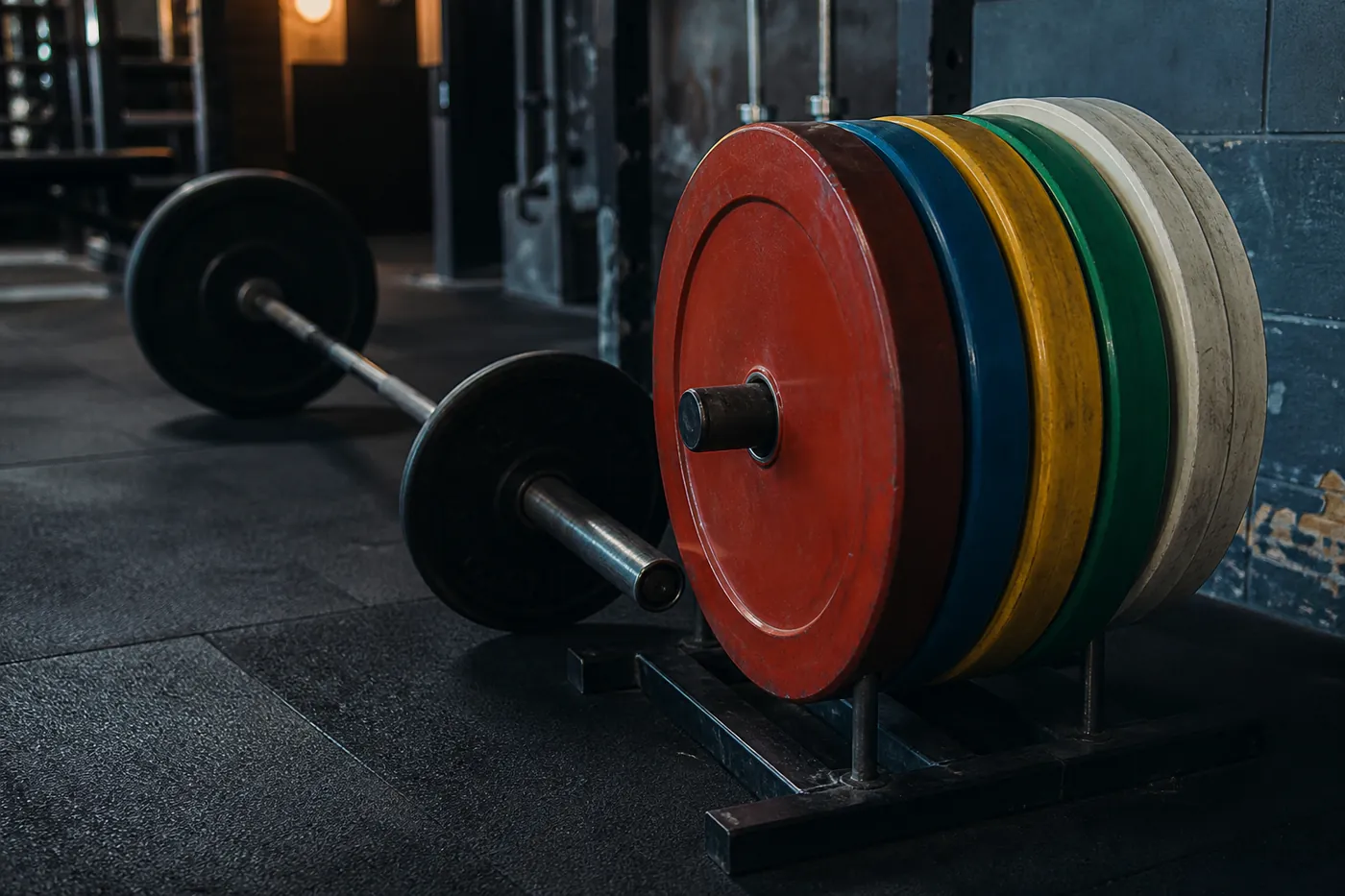
What the plate colours mean, and why black bumpers ignore them
Red, blue, yellow, green and white are not decoration. They are a code that lets a referee read a loaded bar from twenty metres away, and knowing it makes a gym floor legible.
18 October 2026 →Pick the type, then the bar.
12 power bars, 8 weightlifting bars, 11 multipurpose bars and the specialist bars besides, all in one table.
Compare all 52 barsNot sure yet?
Start with what the numbers on a listing mean. Thirty minutes there will save you from the most common mistake, which is buying a specialist bar for general training.
Specs explained