Most barbell advice is written in places with central heating and dry air. Britain has neither, and if
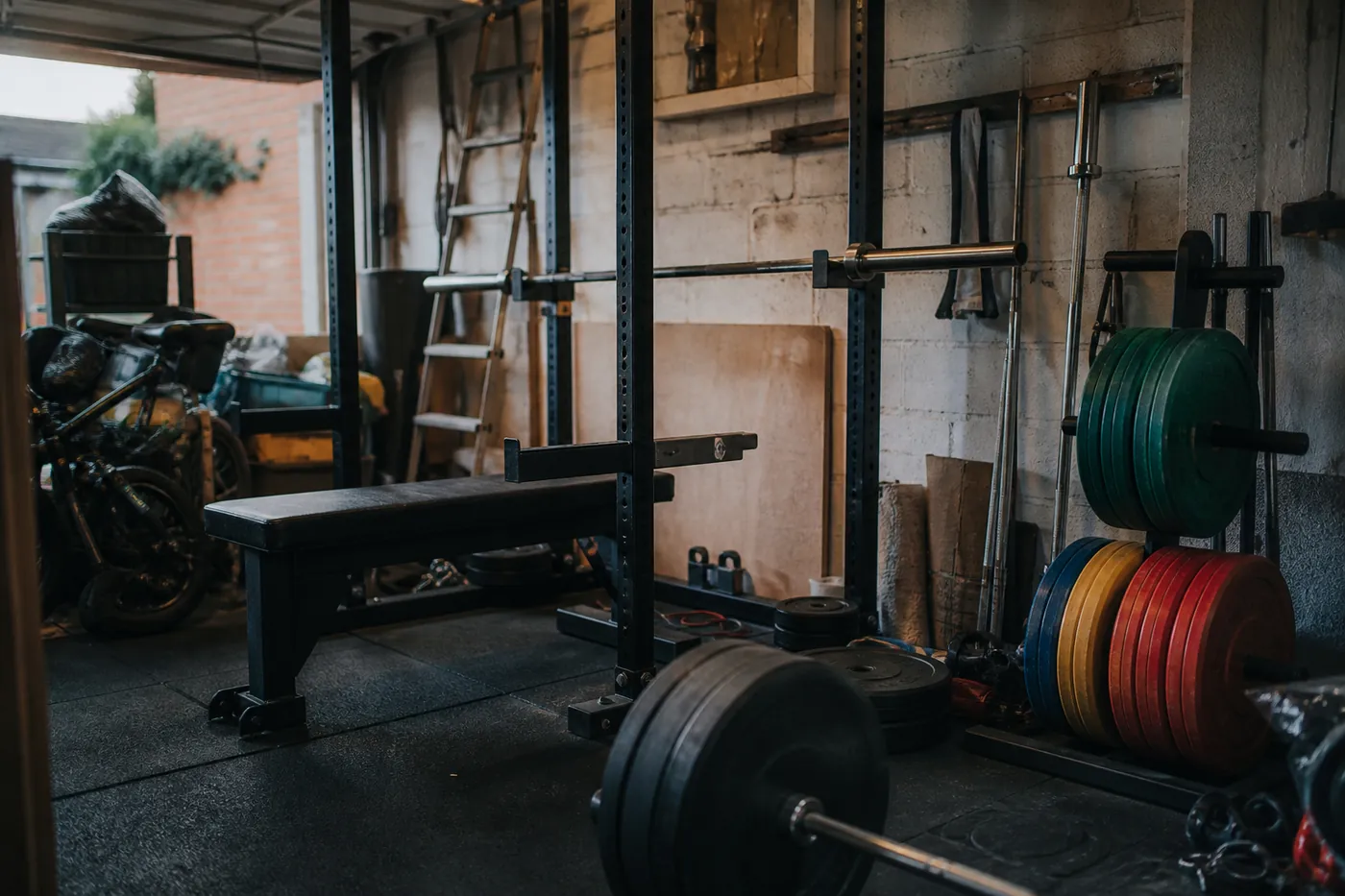
your gym is a garage then the single most underrated decision in the whole purchase is the finish on the
shaft.
What actually happens in there
An unheated garage in a British winter is a condensation machine. The concrete floor and the steel in the
room hold cold. Warmer, damper air gets in — when you open the door, when the weather turns, when you
train in there and breathe — meets that cold steel, and water forms on it. Then it dries. Then it happens
again, perhaps two hundred times between October and March.
Bare steel in those conditions will show orange bloom within weeks of being left alone. Black oxide, which
is a conversion coating rather than a barrier, is only marginally better and relies on a film of oil that
you have to keep replacing.
This is not a reason to avoid those finishes. It is a reason to decide honestly whether you will look after
them, because the people who do get the best grip feel available and the people who do not end up with a
rusty bar.
What each finish actually does
Bare steel. No coating at all, so the knurl is exactly as sharp as it was machined. The best grip you
can buy and the highest maintenance. Needs wiping down after every session and oiling regularly.
Black oxide. A chemical conversion of the surface, very thin, so grip feel is close to bare steel.
Slightly more corrosion resistance than nothing, and still needs oiling. Will patina with use, which some
people like.
Zinc. Cheap, reasonably protective, and it wears through on the knurl peaks over time, which is why
an old zinc bar looks silvery in the places your hands go. Bright zinc and black zinc are the same thing
with different appearance.
Hard chrome. A thin, dense, very hard layer that follows the machined knurl profile closely. Good
corrosion resistance, excellent abrasion resistance, and the default for shared and commercial gyms for
good reason.
Stainless steel. The shaft is stainless throughout rather than coated, so there is nothing to wear
through and nothing to rust. The best combination of grip and corrosion resistance available, and the most
expensive. If your gym is damp and you want a bare-metal feel, this is the answer.
Cerakote. A ceramic coating, sprayed and baked on. Resists corrosion very well, comes in colours, and
sits slightly on top of the knurl so the grip feels a fraction softer than bare steel. A sensible choice
for a garage, and it is why several makers now offer it.
Maintenance that is worth doing
Three things, and none of them takes long.
Wipe the shaft down after every session. Sweat and chalk hold moisture against the steel, and chalk is
mildly hygroscopic, so leaving a chalked bar in a damp garage is leaving a damp bar. A cloth takes ten
seconds.
Oil a bare steel or oxide bar regularly. Three-in-one oil on a rag is fine; so is any light machine
oil. Wipe it on, wipe the excess off. Nothing exotic is required.
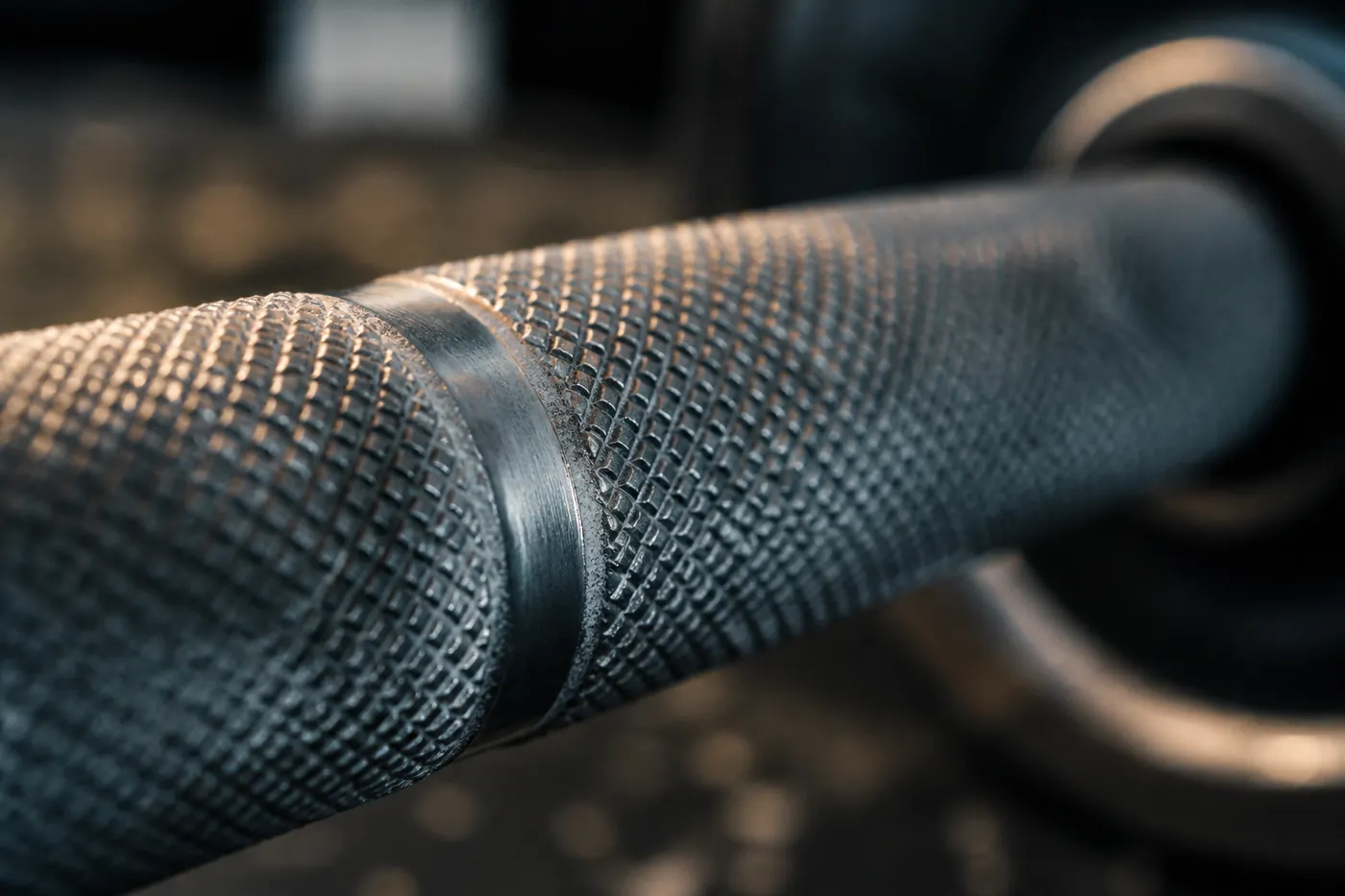
Brush the knurl occasionally. A nylon or brass brush along the knurl, not across it, lifts out the
chalk that has packed into the valleys. A toothbrush works. Do not use a steel brush on a coated bar.
Two things worth adding if your garage is genuinely damp: keep the bar off the floor and off a cold outside
wall, on a rack or on J-cups, so air gets round it. And a cheap dehumidifier will do more for every piece of
steel in the room than anything you do to the bar itself.
What not to do
Do not put a bar away wet. Do not store it in a fabric cover in a damp room, which traps moisture against
the steel rather than keeping it out. Do not oil the sleeves hoping it helps the bearings — oil attracts
chalk dust and grit, which is exactly what you do not want inside a sealed sleeve, and the bushings on
modern bars are frequently graphite-infused and self-lubricating by design.
And do not use a wire wheel on a power drill, which will take the coating off along with the rust.
Rust that has already started
Surface rust on a straight bar is a cosmetic problem, not a structural one, and it comes off.
Oil the affected area and leave it a few minutes. Work along the knurl with a brass brush or a nylon pad —
along the shaft, following the knurl lines, never across them. Wipe off the slurry of oil and rust. Repeat
if needed. Then oil the whole shaft and keep on top of it.
What you cannot fix is a bend. Roll the bar slowly along a flat floor and watch the ends: a wobble means
the shaft has taken a permanent set, usually from being loaded beyond its rating or dropped badly, and a
bent bar is scrap. That is the real reason to pay attention to the load rating on the listing rather than
the headline tensile figure.
The decision, in one line
If you will do the maintenance, buy bare steel or black oxide and enjoy the best knurl feel there is. If
you will not — and most people will not, honestly — buy hard chrome, stainless or Cerakote and stop
thinking about it.
Written by OlympicBars.co.uk. This site publishes no reviews, scores or rankings, and nobody here has tested the equipment described. Specifications quoted are the manufacturers’ own.