If you have ever watched weightlifting at the Olympics and wondered why the plates are such specific
colours, the answer is that they are a code, and once you know it you can read any bar in any gym in the
world without walking over to it.
The code
Five colours, repeating at two scales.
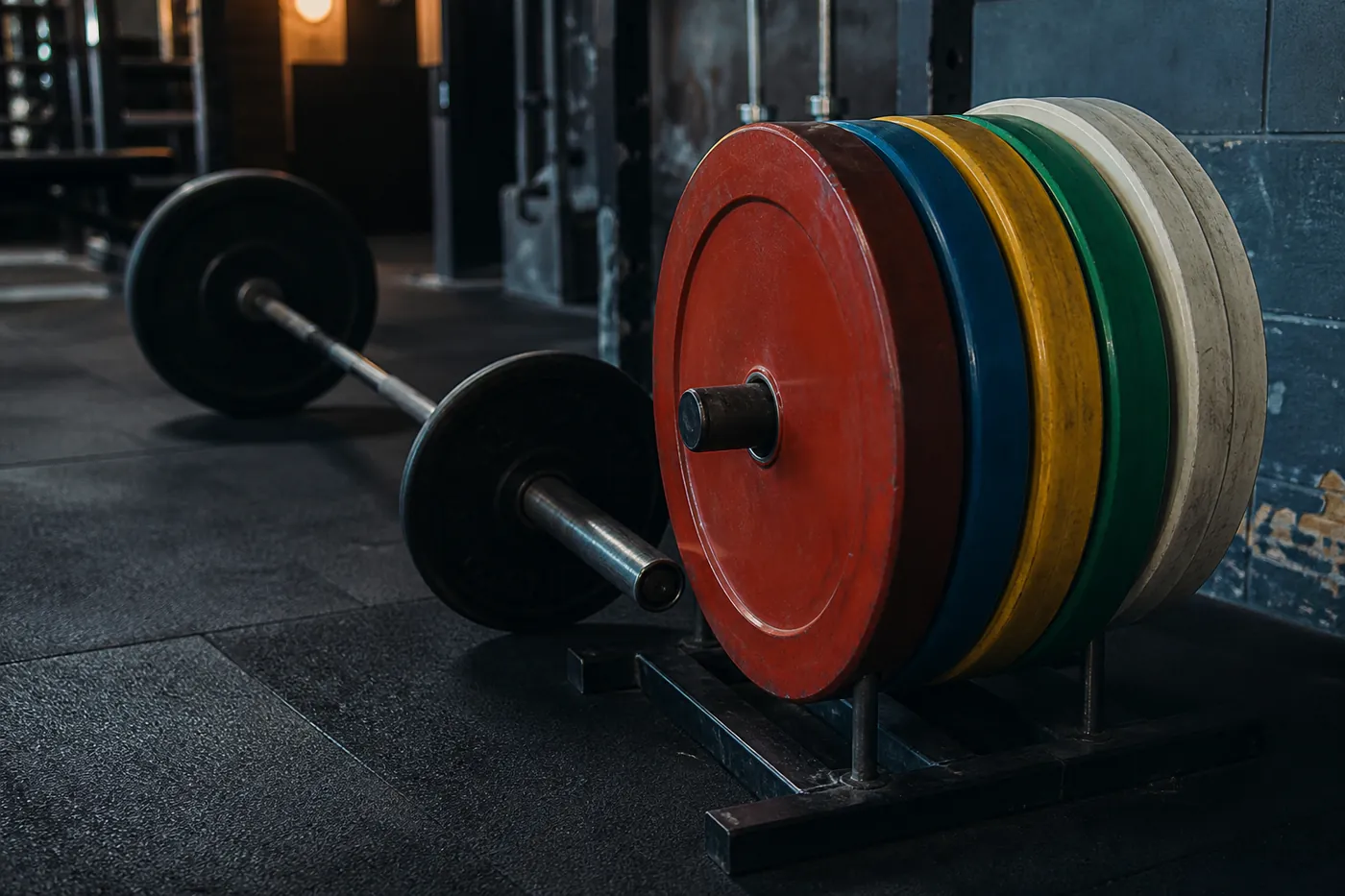
The large discs: 25kg red, 20kg blue, 15kg yellow, 10kg green, 5kg white.
Then the same sequence again on the small change plates: 2.5kg red, 2kg blue, 1.5kg yellow, 1.25kg
green, 0.5kg white.
That is it. It is set by the International Weightlifting Federation and used on competition bumper plates
and on calibrated powerlifting discs, which follow the equivalent IPF colours.
Why it exists
A referee, a coach and a loader all need to know what is on the bar, instantly, without counting. At a
competition the bar is loaded and reloaded dozens of times between attempts and an error is a serious
matter — a lifter attempting a weight they did not ask for is at best a disrupted attempt and at worst an
injury.
The colour code makes the load readable at a glance from the other side of the platform. Red-blue means
45kg a side. Red-red-blue means 70kg a side. You do not count the plates, you read the colours.
It also means a loader cannot easily put the wrong plate on without someone noticing, which is the real
safety function.
The bar ends are colour-coded too
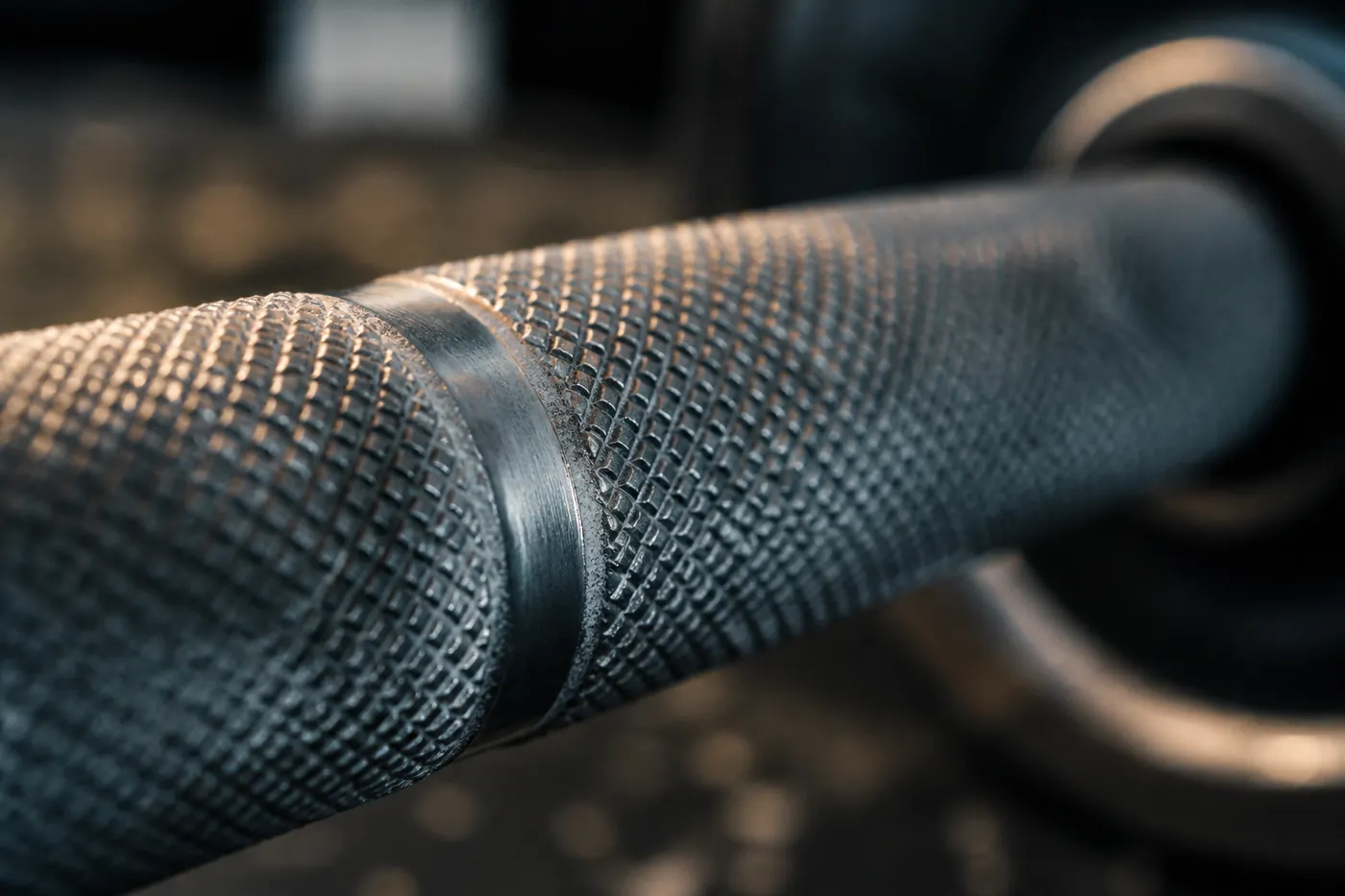
Look at the end caps on a competition bar and they carry the same code: a 20kg men’s bar has blue end
caps, a 15kg women’s bar has yellow. Strength Shop list exactly this on their Riot bars — blue for the
20kg models, yellow for the 15kg women’s bar, red for the 25kg squat bar.
So the whole implement is readable. Blue caps and red-blue plates: 20kg bar, 90kg of plate, 110kg on the
bar.
Why your black bumpers ignore all of it
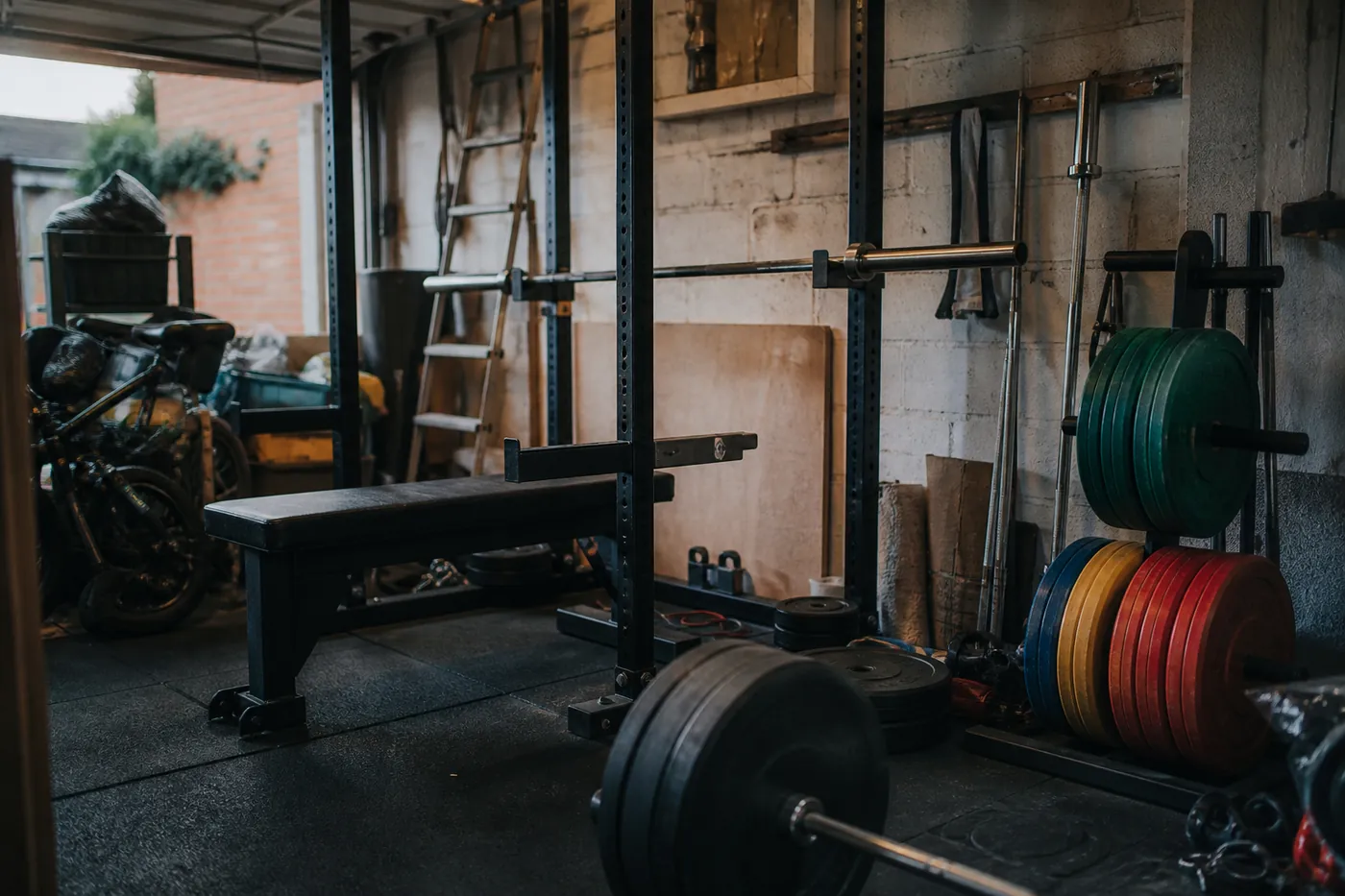
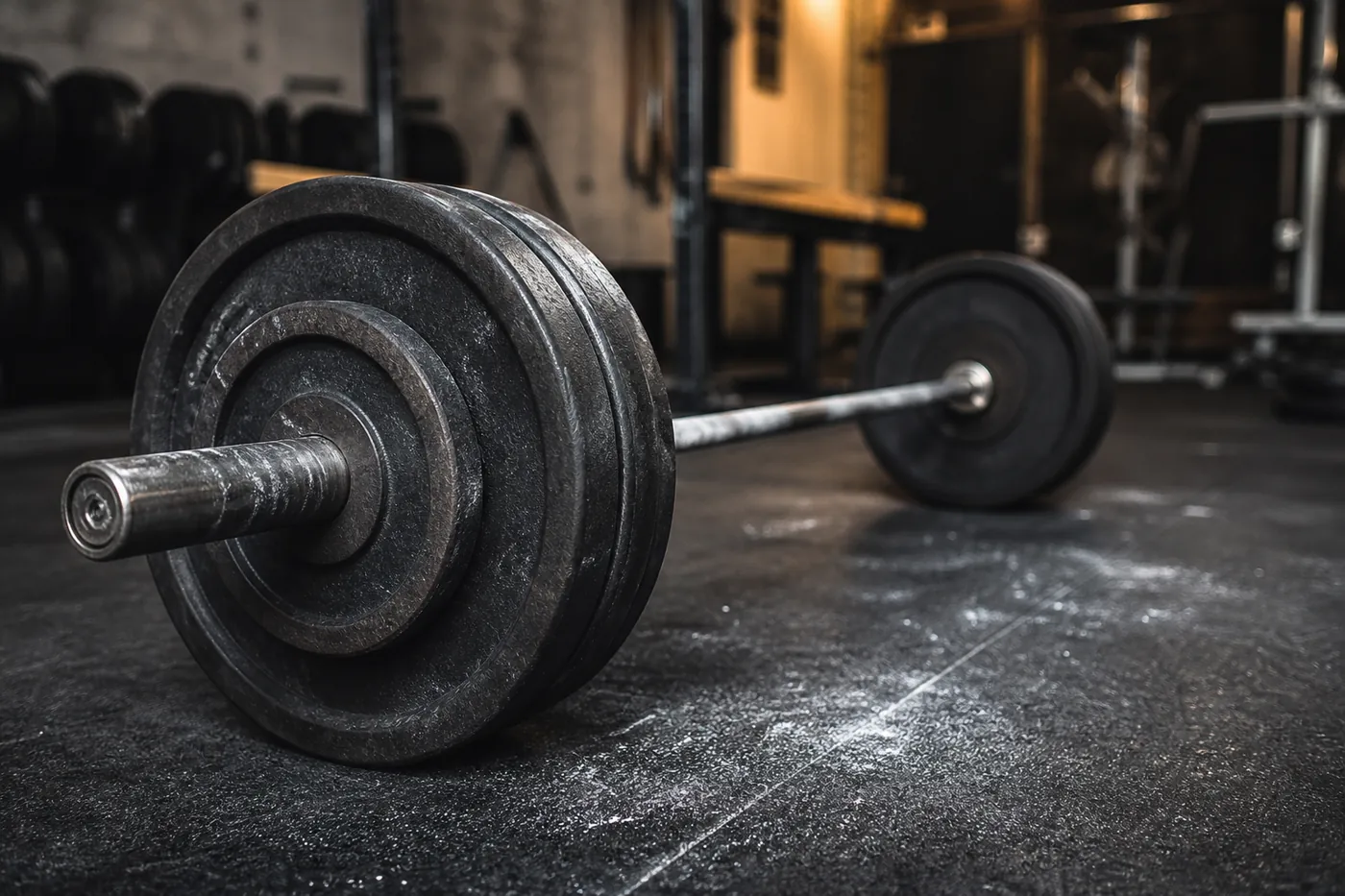
Walk into most British home gyms or functional-fitness gyms and the bumpers are black. That is not a
mistake or a cheap imitation — plain black training bumpers simply do not participate in the code, and
there is a sound reason.
Coloured rubber costs more to make, and the pigment is in the rubber rather than painted on. For a
training bumper, where what you want is a plate that survives being dropped several thousand times, the
money is better spent on the rubber compound and the steel insert than on the colour.
Competition bumpers are a different product. They are colour-coded, made to tighter weight tolerances, and
cut to a narrower profile for the same mass so you can fit more weight on the sleeve. You are paying for
accuracy, for readability and for sleeve space, not for durability.
The practical upshot
If you are kitting out a gym where anyone else will train, coloured plates are worth more than they look.
A floor of colour-coded plates is a floor where a coach can see what every lifter has on the bar from
across the room, and where someone else’s bar is instantly legible when you take it over.
If it is your own garage and you are the only person who will ever load it, black bumpers are the sensible
purchase and you will know what is on the bar because you put it there.
Either way, the thing to check is not the colour but the collar opening — 50mm, for an Olympic bar — and
the published diameter and weight tolerance. The colour is information. The fit is the purchase.
Written by OlympicBars.co.uk. This site publishes no reviews, scores or rankings, and nobody here has tested the equipment described. Specifications quoted are the manufacturers’ own.