8 bars listed

Olympic weightlifting bars

A weightlifting bar is built so the shaft can turn inside your hands while you turn your hands over. That is what the needle bearings are for, and it is the single biggest functional difference between a weightlifting bar and anything else. The shaft is 28mm, the grip markings sit 910mm apart to the IWF standard, and the bar is meant to be dropped.

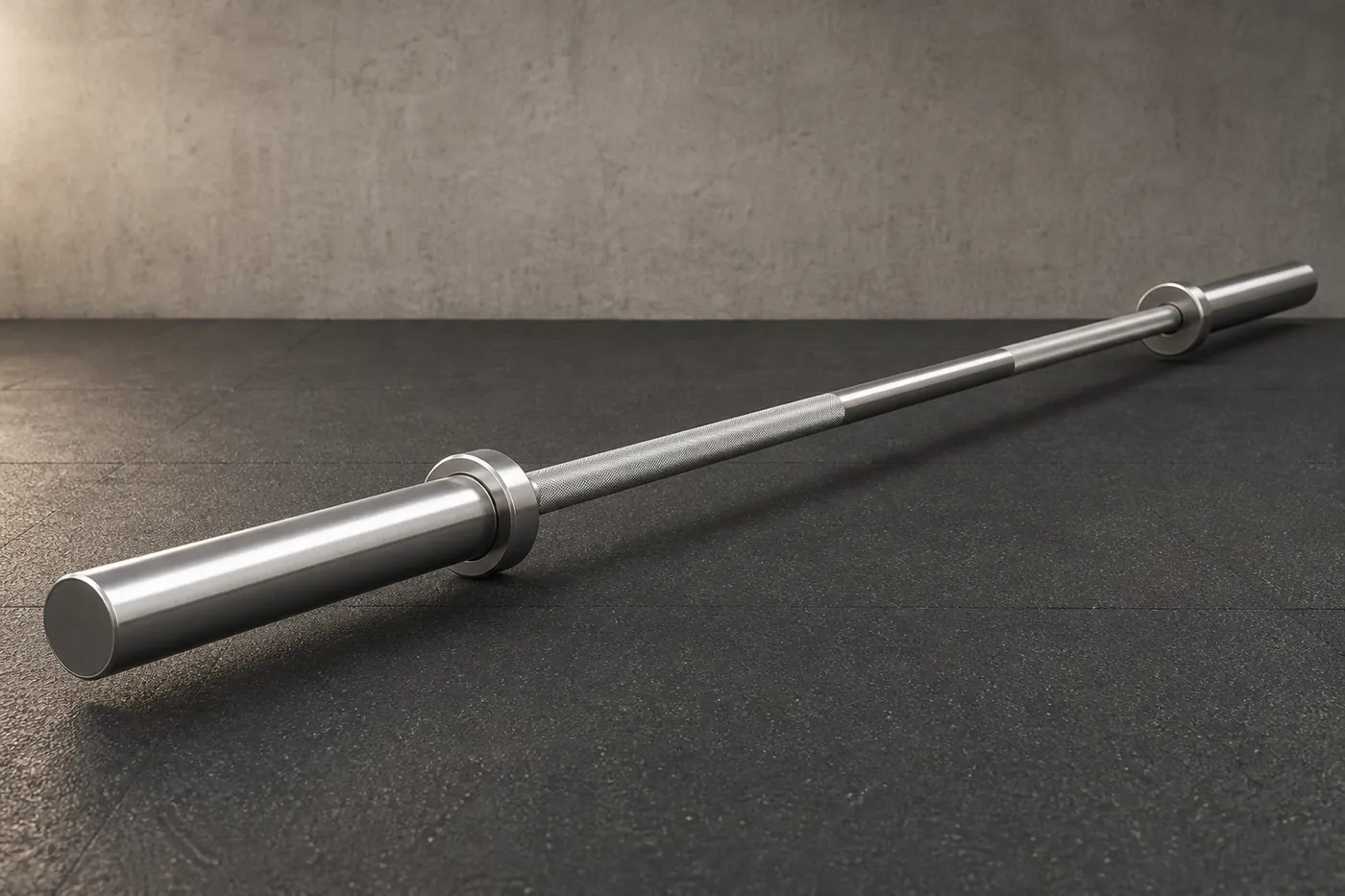
About the photographs. Product photography on this page is illustrative. We are licensing real images of each bar and will swap them in per product as they arrive — until then the pictures show a generic unbranded bar of that type, not the product named beside them.

Side by side

Compare the specifications

The same 8 bars as a table, on the figures that decide it.

Olympic weightlifting bars sold in the UK, compared on published specifications
BarWeightShaftLengthRotationTensileCentre knurlSold by
Eleiko IWF Weightlifting Competition Bar, 20kg (Men)Eleiko20kg28mm220cmBearing236kYesEleiko
Eleiko IWF Weightlifting Training Bar, 20kg (Men)Eleiko20kg28mm220cmBearing236kYesEleiko
Rogue 28MM IWF Olympic Weightlifting Bar with Centre Knurl — Bright ZincRogue20kg28mm220cmBearing215kYesRogue Fitness
Strength Shop Riot Weightlifting Bar 2.0, 20kg — IWF Men's SpecStrength Shop20kg28mm220cmBearing—NoStrength Shop
Bulldog Gear Elite Men's Olympic Weightlifting Barbell, 20kgBulldog Gear20kg28mm220cmBearingsee specYesBulldog Gear
Mirafit Showtime 20kg Olympic Weightlifting BarMirafit20kg28mm220cmBearing190kPassiveMirafit
Jordan Fitness 7ft Ultimate Men's BarJordan Fitness20kg28mm7ftBearing——Fitness Superstore
Hammer Strength 7ft Chrome Olympic Bar (28mm)Hammer Strength20kg28mm—Bearing—NoFitness Superstore

Every figure is the manufacturer’s or retailer’s own published specification. An em dash (—) means they do not publish that figure — it is never a number we have guessed. “Tensile” is tensile strength in thousands of PSI. “Rotation” is bushings, needle bearings, or both in the same sleeve. No prices are listed here, deliberately: check the current price with the shop.

Needle bearings, and why they cost what they cost

A bushing is a bronze sleeve the shaft turns inside. A needle bearing is a cage of small rollers, and it lets the sleeve spin with far less resistance. During a snatch the bar has to rotate perhaps half a turn in the time it takes you to get under it. With bushings, that rotation drags on your wrists. With bearings, it does not.

Bearings are more parts, machined to tighter tolerances, in a sleeve that has to be sealed against chalk and dust. That is most of the price difference. Makers publish bearing counts — five per sleeve, eight per bar, ten per bar — and more is generally smoother, though sleeve construction and sealing matter at least as much.

Whip is a feature here

A good weightlifting bar flexes. In a clean, the bar bends as you pull, stores a little energy, and gives it back as it straightens — which arrives, if your timing is right, exactly as you are turning over. Competitive lifters train to use it.

This is why weightlifting bars are 28mm rather than 29mm, and why they use high-grade steel: you want flex that springs back cleanly and predictably every time, which cheap steel does not do.

IWF certified, IWF spec, and the gap between them

Certification means the IWF has tested and approved that exact bar for use in sanctioned competition. On this site only Eleiko’s bars carry it. It is expensive, and outside competition it buys you nothing.

Several makers build to IWF dimensions without paying for certification, and the honest ones say exactly that. Strength Shop writes on its Riot Weightlifting Bar listing that it follows the relevant IWF specification but is not IWF-certified. That sentence is worth more than any marketing claim, because it tells you precisely what you are getting.

Dropping it

Weightlifting bars get dropped from overhead, repeatedly, which is what the load ratings are really about. Bulldog Gear publishes a tested capacity above 907kg on its Elite men’s bar; Mirafit publishes 680kg on the Showtime. Those are not numbers about how much you can lift — they are numbers about how much abuse the bar absorbs.

You also need bumper plates and a floor that can take them. A bearing bar landing on bare concrete with cast iron on the end damages the bar, the plates and the floor at once.
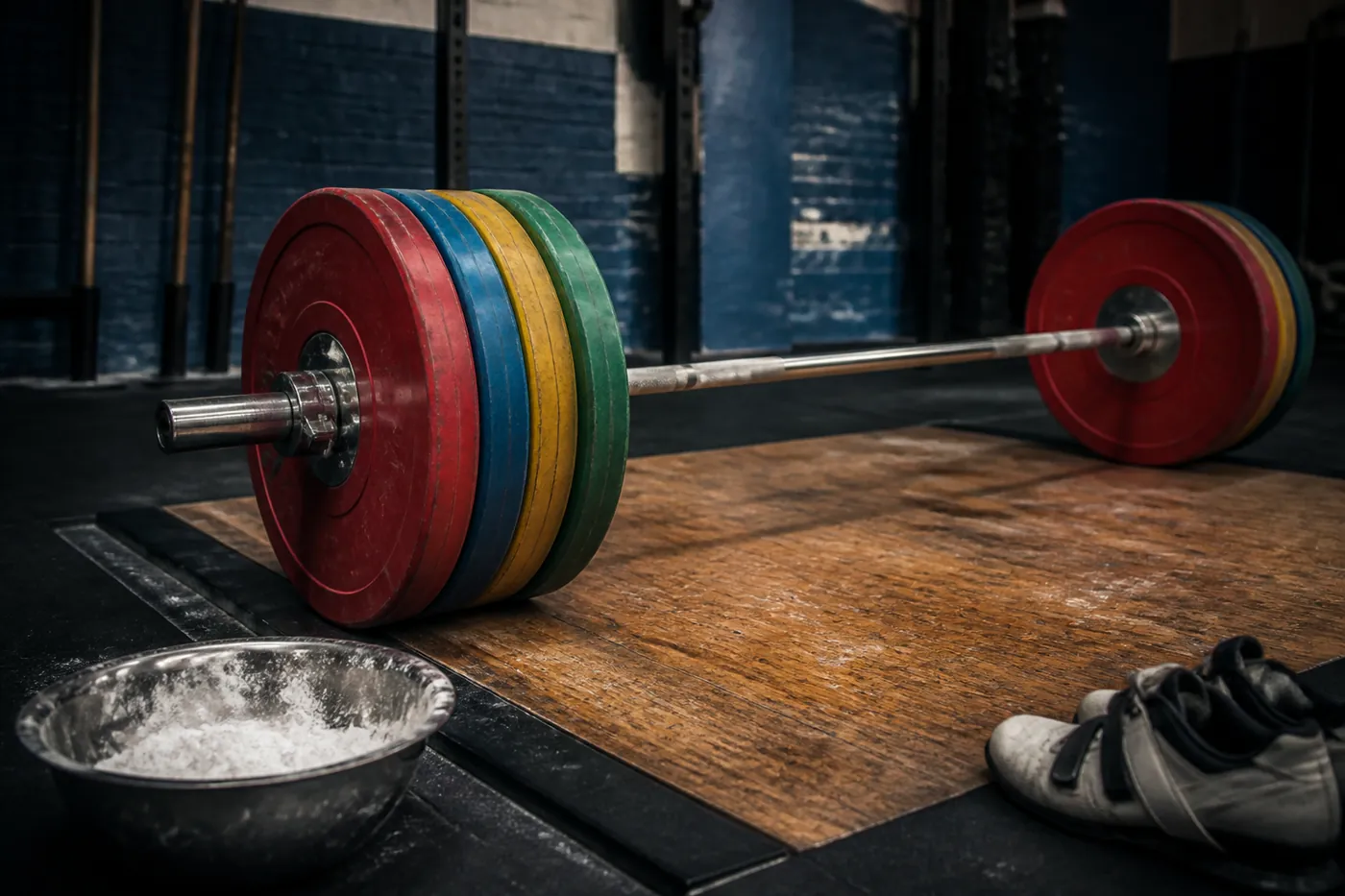
A barbell loaded with colour-coded bumper plates resting on a wooden weightlifting platform, chalk bowl beside it.
Before you buy

What to check

  • Needle bearings, not bushings — this is the one that cannot be compromised
  • A 28mm shaft for a men’s bar, 25mm for a women’s
  • IWF grip markings at 910mm
  • A centre knurl decision: helpful on heavy cleans, unpleasant in a front rack
  • A published drop or load rating, and bumper plates to go with it
  • A floor or platform that can take a dropped bar
  • Honest wording about certification — "IWF spec" is not "IWF certified"
Questions

Olympic weightlifting bars: common questions

Including the answers that tell you this is not the category you want.

Do I really need bearings, or will bushings do?

If you train the snatch and the clean and jerk regularly, you need bearings. The rotation is part of the movement, and fighting a slow sleeve puts the strain on your wrists and elbows. If you only do the occasional power clean, bushings are fine and you should buy a multipurpose bar instead.

What is the difference between a competition bar and a training bar from the same maker?

Usually the knurl and the tolerance, not the steel. Eleiko’s IWF competition and training bars are both 28mm, both 236,000 PSI, both certified — the competition bar has a sharper 1.2 Competition knurl and the training bar has a gentler 1.2 Training knurl, because competition knurling tears your hands up over a long training block.

Can I drop a weightlifting bar with cast iron plates on it?

No. Cast iron cracks and chips, and the shock goes straight through the sleeve into the bar. Dropping is what bumper plates exist for. If you cannot have bumpers and a suitable floor, you cannot train the Olympic lifts properly, and a bushing bar would serve you better.

Why is there a 15kg bar as well as a 20kg one?

Because the IWF specifies a 15kg bar with a 25mm shaft and a 201cm length for women’s weightlifting, against 20kg, 28mm and 220cm for men’s. The thinner shaft is about hand size, not strength, and plenty of men with small hands find a 25mm bar easier to hook grip.