The other half of the purchase

Weight plates for an Olympic bar

Any plate with a 50mm collar opening fits any bar with 50mm sleeves, which is every bar on this site. That is where the simplicity ends: bumpers, calibrated steel and cast iron are three genuinely different purchases, and buying the wrong one is an expensive mistake to undo.

Start with one question: will you drop it?

If a loaded bar is ever going to hit the floor from overhead or from your hips — snatches, cleans, jerks, or a squat you have to bail out of — you need rubber bumper plates and a floor that can take them. Nothing else survives that, and cast iron will crack, chip and destroy your floor on the first attempt.

If you only squat, press, row and deadlift under control, cast iron is far cheaper per kilo and entirely sound. If you compete in powerlifting, you need calibrated discs, because nothing else is thin enough to fit 300kg onto a 400mm sleeve.

Most home gyms that do a bit of everything end up with bumpers for the lifts, iron for the slow work, and a set of change plates so progress does not have to come in 5kg jumps.

And the one most people get wrong

Sleeve length. A typical 7ft bar gives you 400 to 430mm a side. That is a great deal of room for thin calibrated steel and much less than you think for 450mm training bumpers, which are thick for their weight. Every bar page on this site lists the loadable sleeve length where the maker publishes it — check it against the plates you intend to buy, not the other way round.

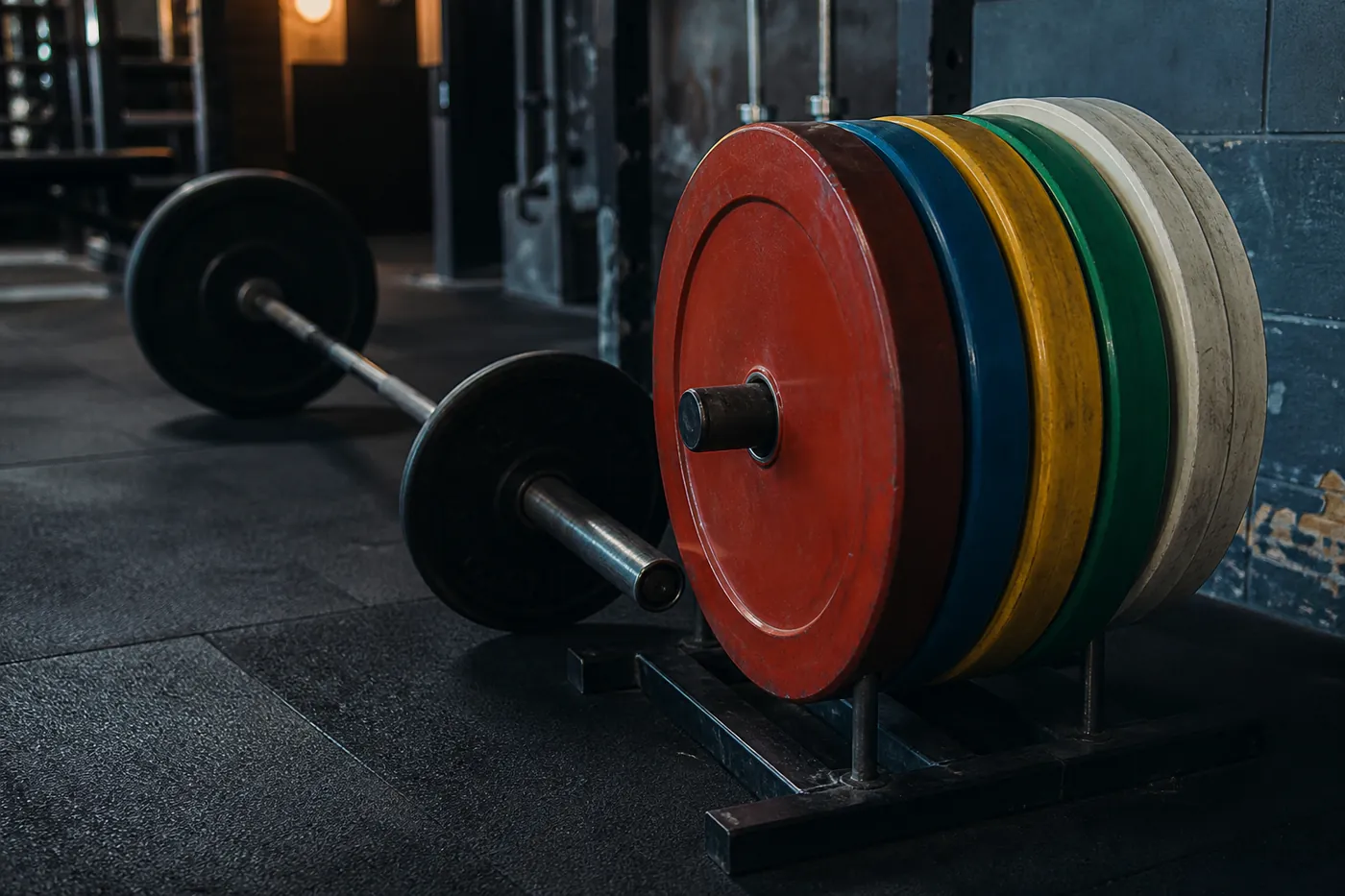
Colour-coded bumper plates stacked on a plate tree beside a barbell in a gym.
The IWF colour code

What the colours mean

Used on competition bumpers and calibrated discs so a load can be read at a glance. Plain black training bumpers do not follow it.

25kg
20kg
15kg
10kg
5kg
2.5kg
2kg
1.5kg
1.25kg
0.5kg
6 kinds of plate

Which plate for which job

Specifications are the makers’ own published figures. No prices — plate prices move with the steel and rubber markets, so check with the shop.

About the photographs. Product photography on this page is illustrative. We are licensing real images of each bar and will swap them in per product as they arrive — until then the pictures show a generic unbranded bar of that type, not the product named beside them.

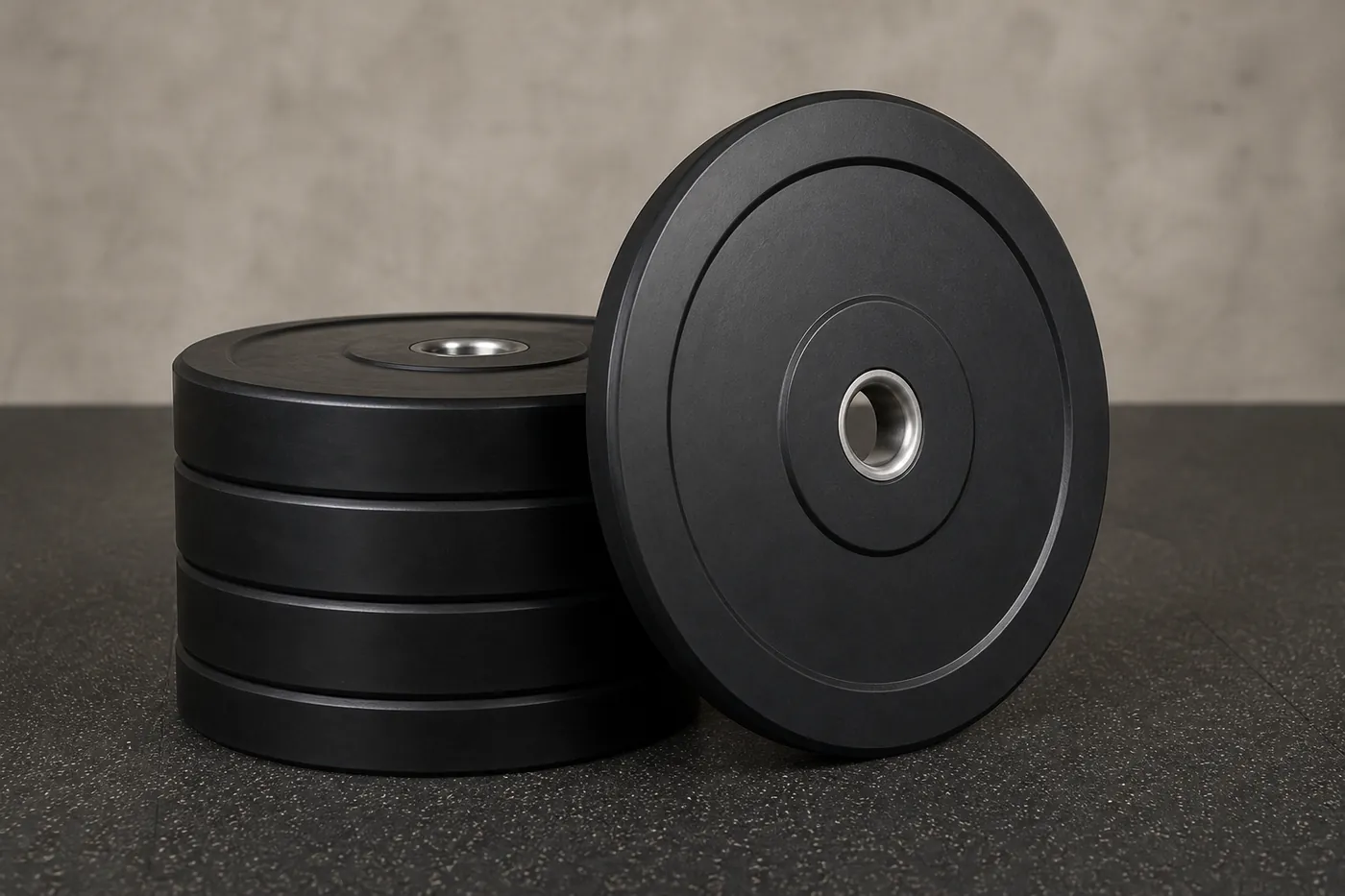
Plain unbranded rubber bumper plates stacked on a gym floor.
Illustrative image — not the actual product

Rubber bumper plates

Steel-insert discs encased in solid rubber, all made to the same outside diameter — 450mm on most ranges — so a 5kg plate is as wide as a 25kg one and the bar always sits at the same height off the floor.

Use it for

Anything you have to drop. Snatches, cleans, jerks, and any lift you might have to bail out of. If you are training the Olympic lifts, these are not optional.

Watch out for

Low-weight bumpers are thick for their mass, so a 450mm 5kg plate eats sleeve length and flexes if you drop it hard. Rubber also smells for the first few weeks in a closed garage.

Collar opening50mm, steel insert
Outside diameter450mm across 5kg–25kg on the Strength Shop Riot 2.0 range
Durometeraround 90 on the Riot 2.0 range, which Strength Shop describe as a low bounce rate
Weight tolerancestated as a maximum percentage by the maker; check the individual range

Competition bumper plates

Bumpers made to the IWF colour code and to tighter weight tolerances, with a thin steel or stainless hub and a narrower profile than training bumpers of the same mass.

Use it for

Weightlifting clubs, competition platforms, and anyone who wants to read the load on a bar at a glance from across the room.

Watch out for

Appreciably more expensive than plain black training bumpers, and the thin profile is the point — you are paying for accuracy and for fitting more weight on the sleeve, not for durability.

Colour code25kg red, 20kg blue, 15kg yellow, 10kg green, 5kg white
Collar opening50mm, with a steel or stainless steel hub
Outside diameter450mm
Tolerancetighter than training bumpers; the maker states the figure per range

Calibrated powerlifting discs

Thin, machined steel discs made to a very tight weight tolerance and colour-coded to the IPF standard. The thinnest plates per kilo you can buy, so you can fit the most weight on a bar.

Use it for

Powerlifting, especially if you compete. Required equipment at IPF-sanctioned meets, and the only way to load 300kg onto a 400mm sleeve.

Watch out for

Steel on steel. They will mark your floor and your bar sleeves, they are not for dropping, and they are the most expensive plates per kilo on this page.

Collar opening50mm, machined for a tight fit on the sleeve
ToleranceStrength Shop quote a maximum tolerance on their IPF-approved range; Eleiko quote theirs per disc
Dimensions (Strength Shop IPF range)25kg 450mm × 26mm; 20kg 450mm × 21mm; 15kg 400mm × 20mm; 10kg 325mm × 20mm
Soldindividually rather than in pairs on the Strength Shop range

Cast iron plates

Plain or deep-dish cast iron discs with a 50mm collar opening. The cheapest way to buy mass, and what most home gyms end up with for pressing and squatting.

Use it for

Squats, presses, rows, deadlifts off the floor or off blocks. Anything you lower under control rather than drop.

Watch out for

Do not drop them — they chip, they crack and they wreck floors. Bare iron rusts in a damp garage. Cheap cast iron also has the loosest weight tolerances of anything here, so a "20kg" plate may not be 20kg.

Collar opening50mm
Finishbare cast iron, painted, or rubber-coated depending on range
Tolerancea stated maximum percentage, looser than calibrated discs

Change and fractional plates

Small plates — 0.25kg to 2.5kg — for making a jump smaller than the smallest pair of standard discs allows. Fractional sets go down to 0.125kg a side.

Use it for

Adding 0.5kg to a press when 2.5kg a side is too big a step. Essential once progress slows, and the cheapest training purchase on this whole site.

Watch out for

Easy to lose, and worth getting a bag or a holder with them. Check the collar opening is 50mm and not 25mm — standard-bar fractionals will not fit an Olympic sleeve.

Collar opening50mm for Olympic bars
Typical range0.25kg, 0.5kg, 1.25kg, 2.5kg
Fractional setsdown to 0.125kg per plate
Finishbare steel, zinc plated, or rubber coated

Technique plates

Full-diameter 450mm plates that weigh far less than they look — commonly 2.5kg or 5kg — in rubber or plastic, so a beginner can practise a lift from the correct bar height.

Use it for

Learning the snatch and the clean and jerk. Pulling from the floor at the right height matters more than the load does when you are learning the positions.

Watch out for

Low load ratings and not built for repeated heavy dropping. They are a teaching tool, not a cheap way to make up a set.

Collar opening50mm
Outside diameter450mm, matching a competition bumper
Typical weights2.5kg and 5kg
Collars

Buy the collars at the same time.

Plates sliding along the sleeve mid-set changes the balance of the bar while you are holding it, which ranges from annoying to genuinely dangerous. Collars are the cheapest useful thing you will buy for a home gym.

One thing to know before you do the maths: competition collars weigh 2.5kg each and count toward the total on the bar. Training collars do not. Check which you have bought.

A 20kg bar plus two competition collars is 25kg before you load a single plate.

Training collars weigh almost nothing. Competition collars do not.
Questions

Plates: common questions

Fitment, sleeve space, bumpers against iron, and why identical weights cost wildly different amounts.

Will any Olympic plate fit any Olympic bar?

If the plate has a 50mm collar opening and the bar has 50mm sleeves, yes. That is what "Olympic" means in this context, and every bar listed on this site has 50mm sleeves. The thing to watch is the opposite mistake: a "standard" bar has 25mm sleeves, and standard plates will not fit an Olympic bar or the other way round.

How much weight will fit on the sleeve?

It depends on the loadable sleeve length and on how thick your plates are. A typical 7ft bar gives you about 400 to 430mm of sleeve a side. That is plenty of room for calibrated steel discs and much less room than you think for 450mm training bumpers, which are thick for their weight. Each bar page on this site lists the loadable sleeve length where the maker publishes it.

Do I need bumper plates or will cast iron do?

If you are going to drop a loaded bar from overhead or from the hip, you need bumpers, and you need a floor that can take them. If you only squat, press, row and deadlift under control, cast iron is far cheaper and perfectly sound. Most home gyms that do both end up with bumpers for the lifts and iron for everything else.

What do the plate colours mean?

They are the IWF colour code, used on competition bumpers and on calibrated powerlifting discs: 25kg red, 20kg blue, 15kg yellow, 10kg green, 5kg white, and the same sequence repeating on the small change plates. It exists so a referee or a coach can read the load on a bar instantly. Plain black training bumpers do not follow it.

Are collars worth buying?

Yes, and they are cheap. Plates sliding on the sleeve during a set changes the balance of the bar mid-lift, which is unpleasant at best. Competition collars weigh 2.5kg each and count toward the total; training collars do not. Check which you are buying before doing your plate maths.

Why does the same plate weight cost so differently?

Three things: tolerance, thickness and what happens when you drop it. A calibrated disc is machined to within grams and is thin for its mass, which is expensive. A cast iron plate is poured in a mould to a looser tolerance, which is cheap. A bumper has to survive being dropped repeatedly, which is somewhere in between. You are not paying extra for the same object.

Pick the bar first

The bar sets the sleeve length you have to work with, so it is worth choosing before you commit to a plate set.

Compare the bars

Where to buy

The UK shops carrying both bars and plates, and what to watch for on delivery and duty.

The shops