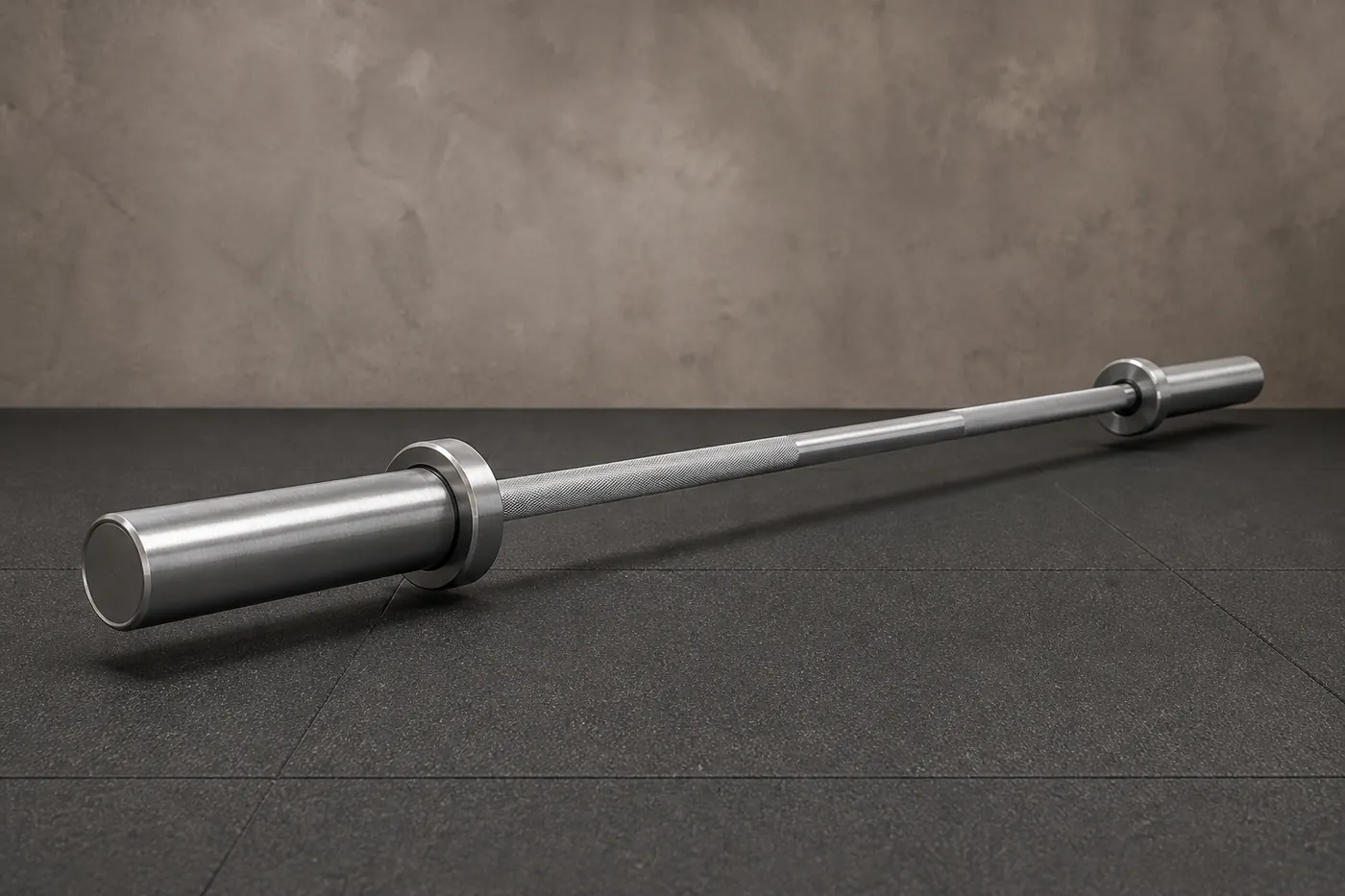
What the 25mm shaft changes
A thinner shaft is easier to close your hand around and easier to hook grip, which is the main reason the standard exists. It also flexes more than a 28mm shaft at the same load, so a 15kg bar whips noticeably more under heavy weight — Strength Shop notes exactly this on its Riot women’s bar listing.
The length is shorter too: 201cm rather than 220cm, with a shorter loadable sleeve. That limits how much you can fit on the end, which only becomes an issue at the top of the sport.
Length and sleeve space
A women’s bar is 201cm against a men’s 220cm, and the loadable sleeve is shorter to match — 320mm on Mirafit’s M3 15kg and 330mm on Rogue’s Bella Bar, against 400mm or more on a 20kg bar.
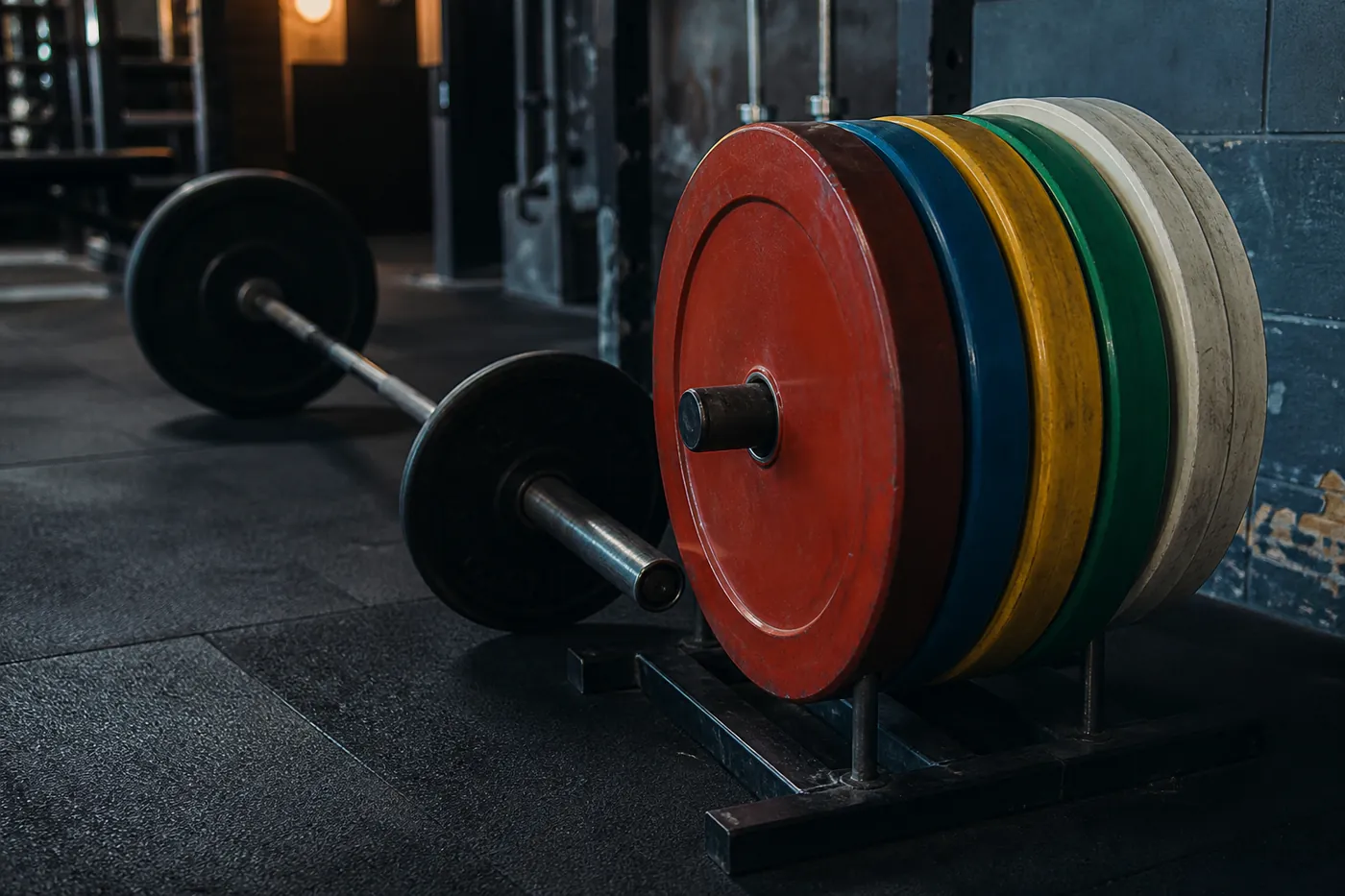
With 450mm bumper plates, which are thick for their weight, that space disappears faster than you expect. It is rarely the binding constraint, but it is worth knowing before you buy a full set of bumpers.
Bearings or bushings, again
The same split applies here as to the men’s bars. A 15kg bar with needle bearings is a weightlifting bar: Strength Shop’s Riot 15kg, Bulldog Gear’s Elite women’s bar, Mirafit’s M3 15kg and Showtime 15kg all have them.
A 15kg bar with bushings is a general-purpose bar that happens to be lighter and thinner — Rogue’s Bella Bar 2.0 and Bulldog’s Home Gym women’s bar are both bushing bars. Both are perfectly good; they are for different jobs.
Not only for women
The category name comes from the federation standard, and it is worth saying plainly that the bar does not care. If you have small hands, if you are coming back from a wrist injury, if you are teaching a teenager, or if you simply find 20kg a clumsy starting load, a 15kg 25mm bar is a sensible purchase regardless of who is lifting it.