Walk into any gym in Britain and almost every bar on the rack will be one of two diameters. A hair over
an inch, or a hair over an inch and a bit. The difference between them is one millimetre, it sounds like
a rounding error, and it is the single most important thing on a barbell listing.
Two sports, two problems
The International Weightlifting Federation specifies a 28mm shaft for a men’s competition bar. The
International Powerlifting Federation specifies 29mm. Both numbers are deliberate, and both exist
because the two sports want opposite things from a steel rod.
Weightlifting wants flex. In a clean, the lifter pulls, the bar bends, and as it straightens it gives a
little of that energy back. Timed properly, it arrives exactly as the lifter is turning over underneath
it. Competitive lifters train to use that rebound, and a bar with no whip in it is harder to lift with,
not easier.
Powerlifting wants the opposite. Under a maximal squat, a bar that is still oscillating when you start
to stand is a bar actively fighting you, and the heavier the weight the worse it gets. The same applies
over your chest on a bench press, where an unpredictable bar is a safety problem rather than just an
irritation.
So one federation picked a diameter that bends usefully, and the other picked a diameter that does not.
Why one millimetre does so much
Here is the part that surprises people. A shaft’s resistance to bending does not rise in proportion to
its diameter — it rises very much faster than that. Roughly speaking, stiffness scales with the fourth
power of the diameter. Going from 28mm to 29mm is about a three and a half per cent increase in
thickness and something closer to a fifteen per cent increase in stiffness.
That is why the step from 28mm to 29mm is something you notice the first time you load either bar past a
couple of hundred kilos, and it is why specialist squat bars go to 32mm and 35mm rather than 30mm.
Strength Shop put the same point plainly on their Riot Squat Bar listing: stiffness increases steeply
with diameter, so the extra millimetres over a power bar make a large difference.
Run the same logic downwards and you get the deadlift bar. At 27mm the shaft bends a great deal, which
is exactly what a puller wants — the bar flexes, the slack comes out, and the plates break the floor
later and slightly higher in the pull than they otherwise would.
Where the other numbers come from
Once you understand 28 against 29, most of the rest of a bar listing falls into place.
The 25mm women’s bar is not about strength, it is about hand size. A thinner shaft is easier to close
a hand around and much easier to hook grip, which is why the IWF specifies 15kg and 25mm for women’s
weightlifting. It also whips more than a 28mm shaft at the same load, for the reason above. Plenty of
men with small hands prefer one, and the bar does not care who is lifting it.
The 28.5mm multipurpose bar is a commercial answer rather than a federation one. Rogue use it on the
Ohio Bar and the Echo Bar: a touch stiffer than a weightlifting bar, a touch more forgiving than a power
bar, and marked for both grip standards. It belongs to no sport, which is the point.
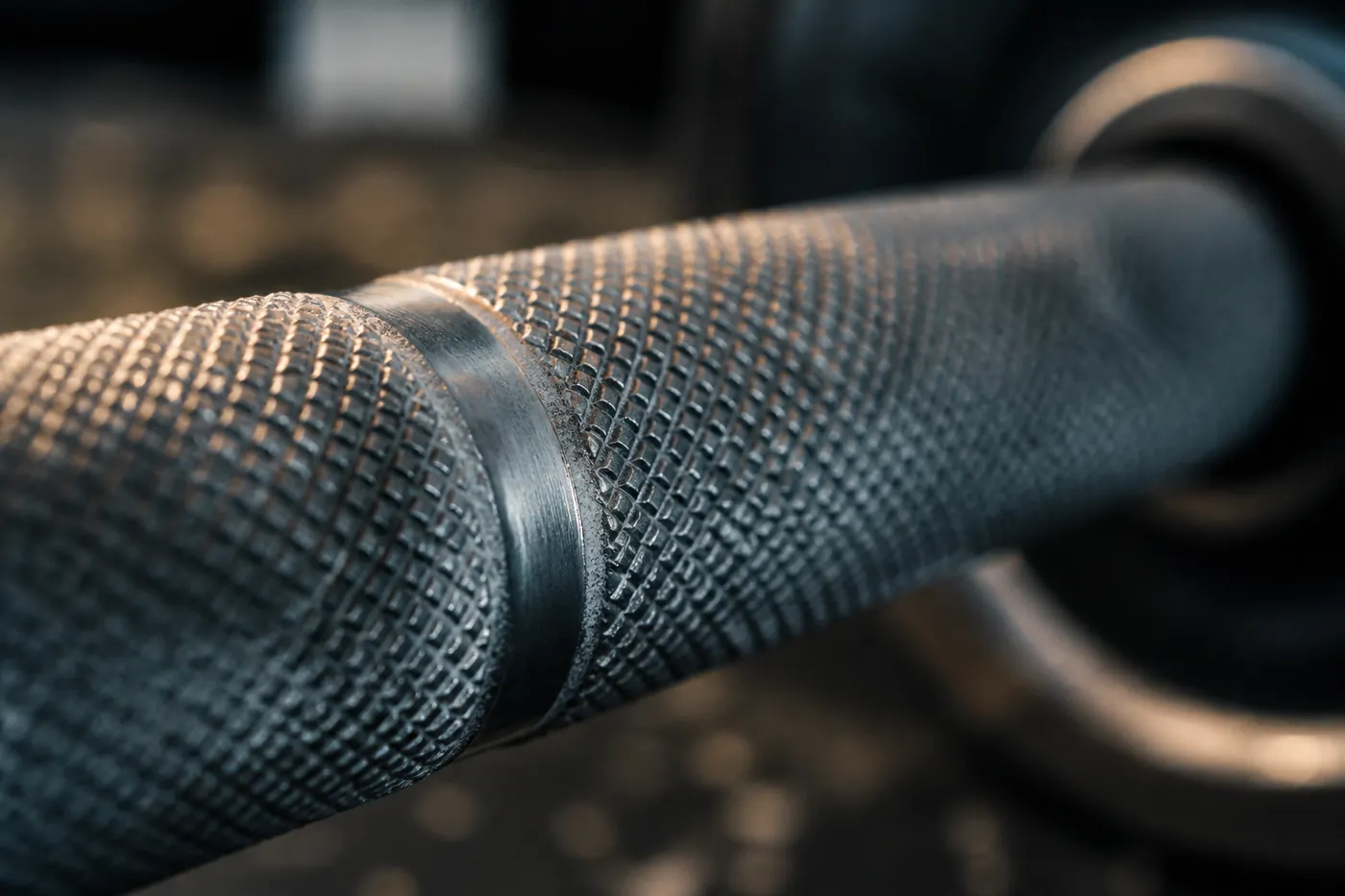
Knurl marks come from the same two rulebooks. Powerlifting rings sit 810mm apart; weightlifting
rings sit 910mm apart. A bar with four rings on it has both, so you can find a legal bench grip and a
snatch grip on the same shaft.
And sleeve rotation divides on the same line. Weightlifting bars use needle bearings, because during
a snatch the bar must rotate in the lifter’s hands as the hands turn over, and a slow sleeve puts that
strain on the wrists. Power bars use bronze bushings, because a fast-spinning sleeve under a heavy squat
just lets the plates whip round and unsettle the bar.
What this means when you are buying
The diameter is not a specification among specifications. It is the answer to the question of what the
bar is for, encoded as a number, and every other figure on the listing is downstream of it.
If you are buying one bar for general training, you want something between the two standards — 28mm or
28.5mm, dual knurl marks, moderate spin. If you have specialised, buy the specialist bar that matches,
and expect it to be worse at everything else. A deadlift bar is genuinely unsafe to squat with; Buddy
Capps say so outright on their own Texas Deadlift Bar listing, and they are not being modest.
One millimetre really is the whole story.
Written by OlympicBars.co.uk. This site publishes no reviews, scores or rankings, and nobody here has tested the equipment described. Specifications quoted are the manufacturers’ own.