Barbells are good things to buy used. They are simple, they are made of steel, and the failure modes are
few and easy to spot. A bar that passes the checks below will usually last you a decade; a bar that fails
two of them is worth scrap value.
The catch is that the two faults that actually matter are not the two that people inspect for. Almost
everyone looks at the rust and almost nobody rolls the bar.
Check one: roll it on a flat floor
This is the one that matters most and the one most buyers skip.
Put the bar on a flat floor with no plates on it and roll it slowly. Watch the ends. A straight bar rolls
smoothly and the sleeves stay at a constant height. A bent bar wobbles, and you will see one or both ends
rise and fall as it turns.
A bent shaft has taken a permanent set, which means it has been loaded past its rating or dropped badly,
and it cannot be straightened in any way worth doing. Walk away. There is no price at which a bent bar is
a bargain, because it will keep bending and it will never rack properly.
If you cannot get it on a flat floor, sight down the shaft from one end like you are checking a rifle
barrel. It is less sensitive than rolling but it will catch anything obvious.
Check two: spin each sleeve by hand
Hold the bar by the shaft and spin each sleeve. You are listening and feeling, not timing it.
A healthy sleeve turns smoothly and quietly, and a bearing sleeve will keep going for several seconds.
What you do not want is grinding, grating, catching, or a gritty feel as it turns. That means chalk and
dust have got past the seals into the bearings or bushings, which is the normal way a well-used gym bar
eventually dies.
It is not necessarily fatal — some bars have serviceable sleeves and the maker sells bearing kits — but it
is a real cost and it should be reflected in the price. Ask the seller whether they know if sleeve kits are
available for that model.
Also check for excessive side-to-side play. A little is normal and by design. A sleeve that rattles
noticeably has a worn snap ring or worse.
Check three: the knurl
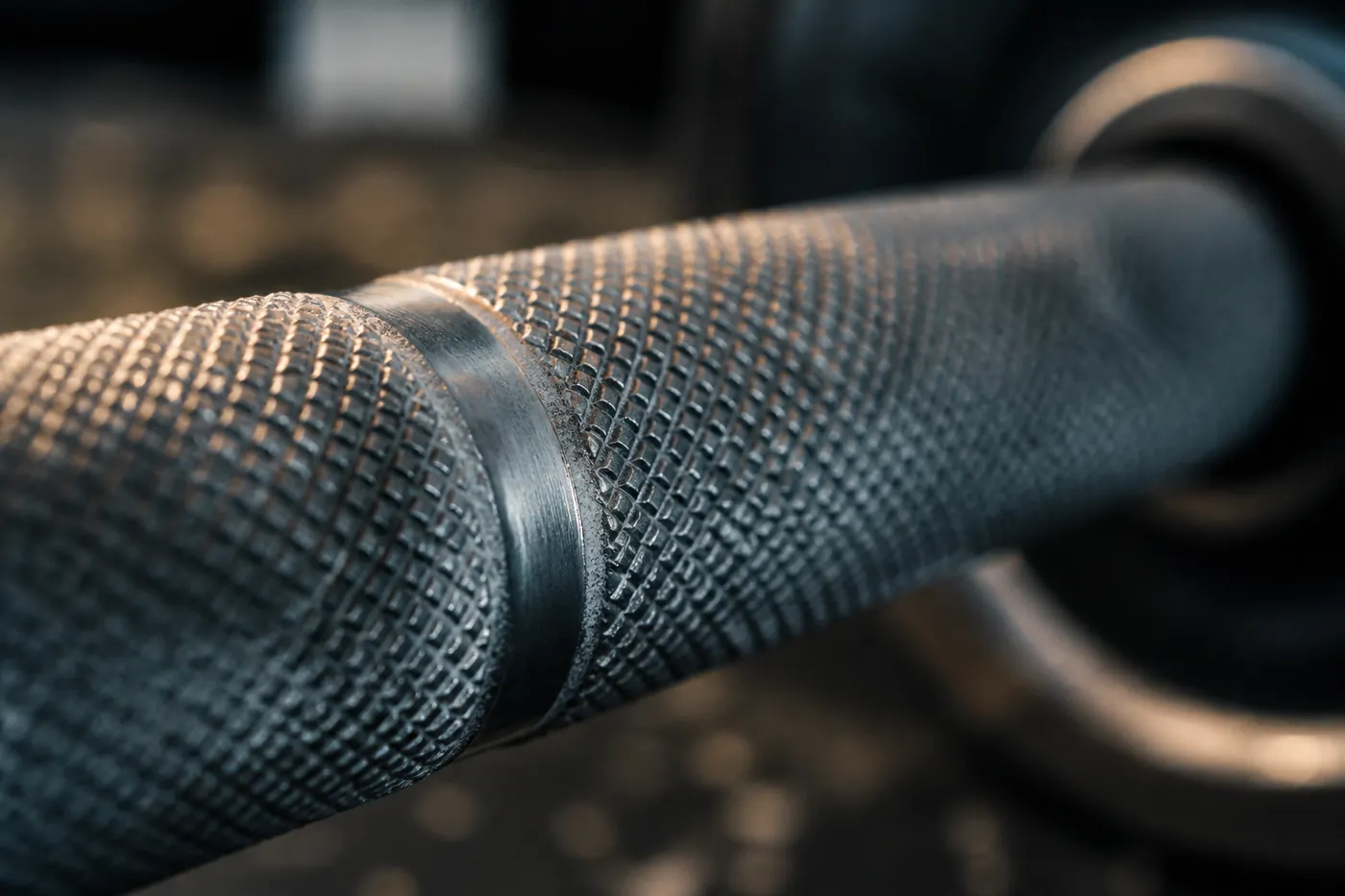
Run your hand along the shaft where the hands go. On a well-used bar the knurl there will be flatter than
it is at the ends — the peaks wear down, and on a zinc-coated bar the coating wears through first, leaving
a silvery patch.
A worn knurl is a comfort and grip issue rather than a safety one, and it cannot be recut economically. It
is a reasonable thing to negotiate on and not a reason to walk away, unless it has worn to the point of
being genuinely slippery.
Check for packed chalk in the knurl valleys while you are there. That cleans out with a brass brush and
tells you nothing except that the bar has been used.
Check four: rust, which matters least
Surface rust looks dramatic and is usually the least important thing on this list.
Orange bloom on the surface of an otherwise straight bar is cosmetic. It comes off with oil and a brass
brush, following the knurl lines rather than across them, and underneath it the steel is fine. A bar with
visible surface rust and a straight shaft and smooth sleeves is often the best value on the market,
precisely because the rust puts people off.
What does matter is pitting — rust that has eaten into the steel and left visible craters rather than a
film on the surface. Run a fingernail across it. A film is nothing; pits in the knurl area mean the bar has
been neglected for years in genuinely wet conditions, and the grip is compromised permanently.
Worth asking the seller
Four questions, and the answers tell you as much as the inspection.
What is it, exactly — make and model, so you can look up the specification and the original load rating.
Where has it lived, because a garage answer explains any rust and a commercial gym answer explains the
sleeves. What has been on it, since a bar rated to 250kg that has had 300kg on it is a bar to be suspicious
of. And whether it has ever been dropped empty or lightly loaded, which is what actually bends sleeves:
with no plate mass to absorb the impact, the whole shock goes through the sleeve assembly.
What a used bar is worth
That is between you and the seller, and this site publishes no prices. What is worth saying is that the
checks above sort used bars into two piles with very little in between. A straight bar with sound sleeves
is worth most of what a comparable new one costs, because it will do the same job for the same decade. A
bent one is worth nothing at all.
Roll it on the floor. Everything else is negotiable.
Written by OlympicBars.co.uk. This site publishes no reviews, scores or rankings, and nobody here has tested the equipment described. Specifications quoted are the manufacturers’ own.